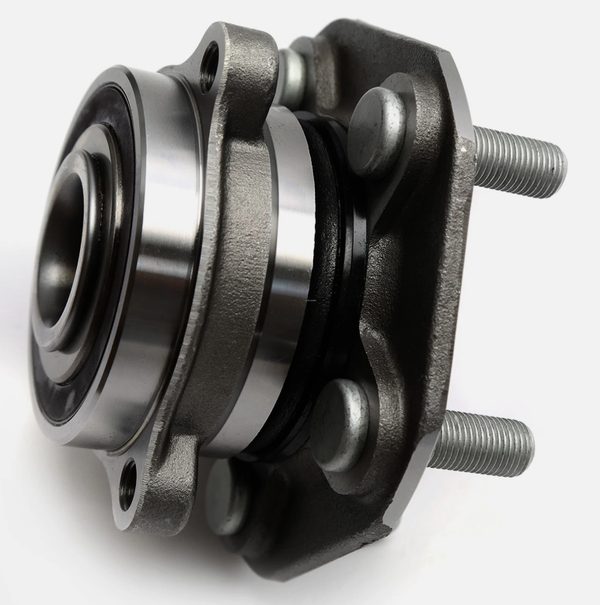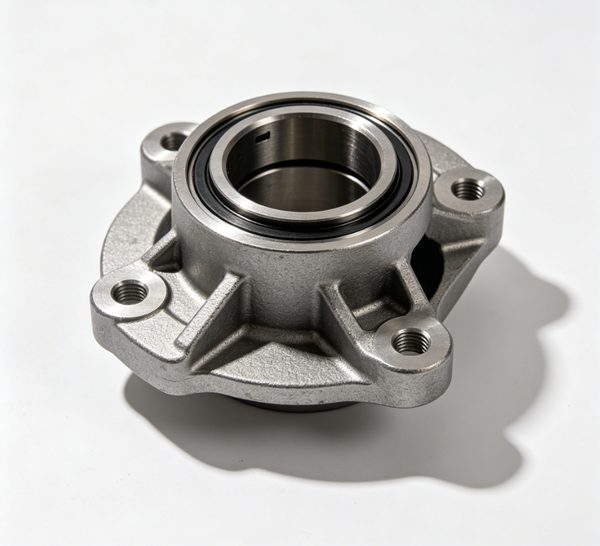


Still, a bursting disc holder clamps the rupture disc between an inlet and an outlet body and forms part of the pressure boundary of a relief line. The holder must stay leak-tight at the seating face up to the disc burst pressure. It must not deform in a way that preloads or unloads the disc. It must also survive the process chemistry upstream and the relief header environment downstream. Also, service is chemical and petrochemical reactors, pharmaceutical and fine-chemical vessels, gas skids, compressor discharge lines and sanitary process plant. Because the seating geometry decides whether the disc seats flat, this is a component where the machining route matters more than the casting route. Generally, holders are supplied as machined bodies; the disc, its burst rating and the relief system certification belong to the customer.
Specifications
| Parameter | Value |
|---|---|
| Surface treatment | Shot blast / Passivation |
| Documentation | EN 10204 3.1 material certificate |
Material and process route
We cast the body in CF8M, the Mo-bearing austenitic cast grade to ASTM A351 or A743 that matches the 316 chemistry family. The holder geometry, with its flanges and outlet passage, is far more economical as a casting than as a hog-out. We supply the disc seating ring in wrought AISI 316L. Its low carbon limit keeps the weld and heat-affected zone free of sensitisation. It also takes a finer surface finish on the seating land than an as-cast surface can.
Overall, both materials are melted or sourced with full traceability, and any joining is done to a documented procedure. After casting the body is solution annealed, pickled and passivated; the finished assembly is re-passivated after machining so that the seating land and bore carry an intact passive layer.
Casting and CNC machining
- Tooling review against the drawing datum scheme, with gates placed away from the seating land and bore.
- Wax injection, tree assembly, silica sol shell build with controlled inter-coat drying.
- Dewax, shell firing, pouring with the heat number recorded on the routing card.
- Knockout, cut-off, shot blast, then solution annealing with charted temperature and soak time.
- Rough CNC turning of flanges, bore and seating land to an even machining allowance.
- Fitting of the AISI 316L seat ring to the agreed procedure, then finish machining of the combined seating face.
- Finish CNC turning and boring of the seating land, bore and flange faces in one clamping where possible.
- Drilling of bolt holes and hinge or tell-tale tappings, deburring, pickling and passivation.
Tolerances and inspection
Additionally, as-cast dimensions follow ISO 8062 classes in the CT6 to CT7 band; all sealing and pressure-boundary features are CNC machined to drawing values. We finish machine the seating land to a flatness within 0.02 mm and a surface finish of Ra 0.8 to 1.6. Concentricity of the seating land to the bore stays within 0.02 mm, so the disc cannot sit eccentric. Still, bore diameter holds +/- 0.02 mm, and the flange face to bore axis perpendicularity within 0.03 mm per 100 mm.
We hold angular tolerance on a bevelled seat to the drawing callout, verified on a CMM. Inspection includes CMM layout against the datum scheme. It also includes surface roughness measurement to ISO 4287, and positive material identification on both the CF8M body and the 316L ring. We agree A first-article layout report and production report format at RFQ stage.
Quality & compliance
We perform fluorescent penetrant inspection to ASTM E165 on all machined surfaces including the seating land. Acceptance criteria come from the buyer’s specification. For a pressure-boundary part this is the default rather than an optional extra. Radiographic examination of the body section, flange-to-bore junction and any weld joining the 316L ring is available to a mutually agreed reference level and acceptance class. Also, positive material identification covers both materials, and intergranular corrosion testing to ASTM A262 Practice E can be arranged for welded or repaired material. Each shipment carries heat-number traceability for both materials and EN 10204 3.1 material certificates listing chemical analysis, tensile results and hardness from accompanying coupons.
Generally, repair welding, where the drawing permits it, is done to a documented procedure with the repair map included in the pack. Hydrostatic testing is run to the buyer’s specified pressure, duration and acceptance criteria when requested; disc burst rating and relief system certification are buyer-side, and no API monogram, PED or ASME stamp approval is claimed. Moreover, the certified system is IATF 16949, and ISO 9001 working procedures are applied throughout.
Packaging and logistics
Holders are pickled, passivated, rinsed in low-chloride water and dried before packing. We protect the seating land and bore with a fitted face guard so that no tool or other part can contact the sealing geometry. Each holder is sleeved individually. Generally, we use chloride-free packing materials throughout, with VCI interleaving between parts. Cartons or crates carry part number, drawing revision, heat lot for each material and quantity. Still, export cases are strapped on heat-treated pallets to ISPM 15 requirements for sea freight; air freight uses double-wall cartons on plastic pallets. Shipment is from Ningbo on EXW, FOB, CIF or DAP terms, with buffer stock held against a rolling forecast where the buyer wants a shorter call-off lead time.
CTA
- 2D drawing with tolerances, GD&T datum scheme and 3D model (STEP or IGES).
- Material callout for body and ring separately: CF8M or AISI 316L, standard, and any restricted substance list.
- Disc type, disc manufacturer and seating geometry, including seat angle and land width.
- Design pressure, burst pressure, operating temperature and relief header conditions.
- Process media on both sides of the disc, including chloride content and cleaning chemistry.
- NDT set required: penetrant method, radiography level and extent, PMI, hydrostatic test scope.
- Annual volume, call-off pattern, first-article requirement and target delivery window.
FAQ
Q1: Why two materials in one holder?
The holder body is a cored, flanged shape that is far cheaper as a CF8M casting than as a machined hog-out. The seating land needs a low-carbon wrought surface that welds without sensitisation and finishes to a fine Ra. Casting the body and fitting a 316L ring gives both properties where they are actually needed.
Q2: Can you guarantee the burst pressure of the assembly?
No. Also, the burst rating belongs to the disc and to the relief system design, both of which are yours. We machine the holder to your drawing and, when requested, run a hydrostatic test to the pressure, duration and acceptance criteria you specify, with the record included in the pack.
Q3: Is repair welding allowed on a pressure-boundary holder?
Only where your drawing and specification permit it, and only to a documented procedure with a repair map included in the documentation pack. If your specification forbids repair, we plan the casting route so that repair is not needed and any suspect part is scrapped rather than salvaged.
Q4: How is the seating land protected in transit?
Each seating land gets a fitted face guard, the holder is sleeved individually, and parts are separated by dividers in a chloride-free pack. We mark cartons with part number, drawing revision and heat lot so goods-in can match each holder to its certificates.