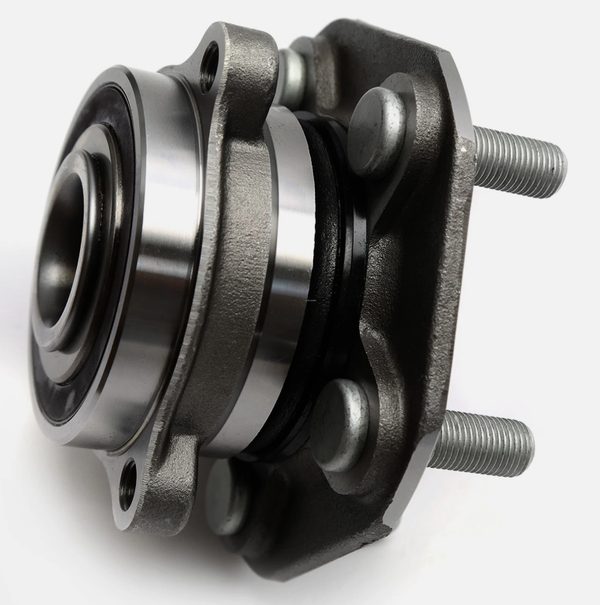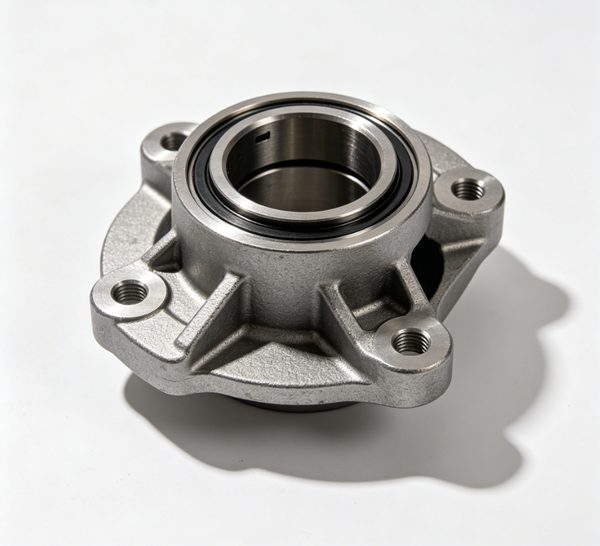


The surgical suction tube connector hub body is the join between a rigid suction tip and the flexible vacuum tubing at the sterile field. It carries the tapered tip seat, the tubing barb and often a thumb-controlled vent port that lets the surgeon modulate suction at the tip. Fab-welded hubs leak at the vent boss weld and leave a rough internal step that catches tissue and slows flow, while solid-machined hubs need deep drilling that raises cost and leaves tool marks. A one-piece investment casting forms the hub body with a cored flow path and an integral vent boss, then machines the tip taper and barb after heat treatment so the connection holds vacuum through a full case.
Specifications
| Parameter | Specification |
|---|---|
| Casting process | Silica sol lost wax investment casting with ceramic or soluble core for the flow path |
| Material options | AISI 316L; 17-4PH (H900 / H1025) and AISI 420 quoted for higher strength connectors |
| Dimensional tolerance (ISO 8062-3 CT grade) | CT5 as cast; CT4 on the tip taper, tubing barb and vent seat after machining |
| Machining | CNC turning of the tip taper and barb, 4-axis milling of the vent port, drilling of the side inlet |
| Surface finish (Ra) | Ra 1.6 um machined externally; Ra 0.4 um electropolished on the flow path |
| Weight range | 12 g to 90 g per hub depending on tubing bore and vent configuration |
| Typical lead time | Tooling 4-5 weeks; first article 2-3 weeks after tooling; production 5-7 weeks |
Key features
- Cored flow path removes the deep drilling operation and eliminates the internal step where tissue collects in solid-machined connectors.
- Electropolished flow path at Ra 0.4 um keeps suction velocity up and gives a surface that flushes and inspects consistently between lots.
- Tip taper machined to gauge after heat treatment, holding the taper that stops the tip popping off under full vacuum.
- Integral cast vent boss removes the weld joint responsible for most reported leaks on fab-built suction connectors.
- Tubing barb profile cast and finish turned with a controlled undercut so tubing seats once and does not creep off during a case.
- AISI 316L low carbon chemistry resists saline, blood and cleaning chemistry, passivated per ASTM A967 before packing.
- Vacuum or pressure decay testing to the customer’s method, with results attached to the lot documentation.
Applications
- Yankauer and Poole suction tube connector hubs for general and abdominal surgery.
- Frazier and Baron neurosurgical and ENT suction connectors.
- Laparoscopic and endoscopic irrigation and suction handpiece hubs.
- Thoracic and cardiovascular chest drainage suction connectors.
- Orthopaedic and spinal surgical field suction line hubs.
- Veterinary and dental surgical aspirator connector bodies.
Quality & compliance
Ningbo Ruican is not an ISO 13485 contract manufacturer. It supplies cast and CNC-machined components in 17-4PH (H900/H1025), AISI 420 and AISI 316L together with project-level documentation under the customer’s Quality Agreement, including material traceability and ISO 10993-5 biocompatibility test support. Every hub lot ships with EN 10204 3.1 material certification, heat lot records, furnace charts where heat treatment is applied, a hardness survey, dimensional reports and leak or vacuum test evidence gathered to the method the customer specifies. Deviations are reported and dispositioned through the customer’s non-conformance process rather than a claimed device QMS registration.
FAQ
Can you reproduce a connector hub from a sample?
Yes. Send a sample hub with the tip and tubing sizes it must accept, and we reverse scan the body, rebuild the flow path and barb profile as a 3D model, and return it with a DFM review covering coring, gating and taper tolerance. Tooling starts after you approve the rebuilt model.
What is the minimum order for a new hub design?
We quote prototype and pilot quantities from a single tooling set, then move to multi-cavity tooling as volume grows. Small hubs like this are frequently ganged in one tool from the start, which keeps the entry order small while still giving a competitive piece price.
What documentation ships with the order?
Orders ship with EN 10204 3.1 material certification, heat lot records, heat treatment furnace charts where applicable, a hardness survey, dimensional reports at the agreed sampling rate and vacuum or leak test results. First article packages add a ballooned dimensional report and photographs.
Can you hold H900 hardness on the 17-4PH version?
Where the hub is specified in 17-4PH, we age to H900 or H1025 in a calibrated furnace with load thermocouples and file the chart against the heat lot. H900 typically reads 38-42 HRC and is surveyed on the taper and barb; out-of-window results are quarantined and reported through your non-conformance route.
Do you passivate or electropolish the flow path?
Both are offered. Passivation per ASTM A967 is standard on all 316L hubs, and electropolishing to Ra 0.4 um is applied to the flow path where a smooth low-resistance surface is specified. Parts are rinsed in deionized water, dried and packed to your instructions.
CTA
Send your surgical suction tube connector hub drawing, sample or 3D model for a DFM review, flow path study and quotation. Contact Wendy She — sales@cnsandcasting.com — WhatsApp +86-13777124360, or visit https://cnsandcasting.com to start your suction instrument program with Ningbo Ruican.